
A fertilizer mixing vessel must match the product, solids loading, chemistry, temperature, and transfer method—not just the required tank volume. By the end, you will be able to identify the right vessel type, define its agitator and materials, and compare a Pune supplier’s quotation against the demands of your process.
Key takeaways
- Use a vessel for dissolved, suspended, dispersed, or coated fertilizer formulations.
- Send dry bulk blends to ribbon or double-cone blenders instead.
- Size the agitator for viscosity, solids loading, heat transfer, and batch time.
- Compare quotations by materials, design data, testing, documentation, and service scope.
Which fertilizer products need a mixing vessel?
A fertilizer mixing vessel is needed for products made by dissolving, dispersing, suspending, or coating ingredients in a controlled batch. Common formulations include urea solution, ammonium nitrate solution, UAN, NPK slurry, micronutrient suspension, liquid fertilizer, and fertilizer coating solution. Dry bulk blends usually belong in a ribbon or double-cone blender, not a liquid vessel.
| Formulation | Process duty | Design consequence |
|---|---|---|
| Urea or ammonium nitrate solution | Dissolve salts and maintain a uniform liquid | Heating or cooling jacket, corrosion review, high-temperature and high-level trips, and controlled venting |
| UAN or liquid fertilizer | Blend compatible dissolved nutrients | Accurate dosing, low-dead-zone agitation, drainability, and protection against crystallisation during cooling |
| NPK slurry | Disperse and suspend insoluble solids | Higher torque, suitable impeller circulation, abrasion-resistant wetted parts, and sufficient outlet size |
| Micronutrient suspension | Keep fine solids suspended without damaging sensitive ingredients | Agitator speed control, sampling access, and resistance to chlorides or acidic components |
| Coating solution or slurry | Wet fertilizer granules or add a surface treatment | Controlled addition, spray or recirculation connection, cleanable surfaces, and rapid drainage |
The formulation determines the equipment because viscosity, solids loading, temperature, corrosiveness, and crystallisation risk change the agitator, motor, jacket, seals, nozzles, and materials of construction.
These are central industrial mixing vessel applications, but volume alone cannot define the machine: provide the recipe, concentration, batch size, target mixing time, and minimum and maximum operating temperature before requesting a quotation.
How the vessel fits into a fertilizer production line
A batch starts with controlled charging into the fertilizer mixing vessel, not with maximum agitator speed. The layout must protect hygroscopic salts from humid Pune air, prevent dust release, and leave enough headspace for foaming, splashing, and thermal expansion.
1. Charge water or the carrier liquid first, then add soluble salts through a closed inlet, solids hopper, or eductor. Add urea, ammonium nitrate, or other salts at a controlled rate; dumping a full sack into stagnant liquid can form hard lumps that the impeller cannot dissolve.
2. Dissolve the soluble ingredients before introducing insoluble powders or micronutrients. Provide a bottom outlet, adequate heating or cooling surface, and an agitator that sweeps the vessel base, because cold zones and dead legs promote crystallisation.
3. Disperse insoluble solids and maintain suspension throughout the batch. The impeller must keep particles suspended during pauses and transfer; a vessel that looks uniform immediately after mixing can settle while a pump is being connected.
4. Take samples from defined locations after the specified mixing time and settling period. Sample only from the surface and you can miss settled solids or concentration gradients near the bottom.
5. Transfer through a low-point, drainable outlet while controlling agitation and pump suction. A short, covered line reduces moisture pickup, contamination, and segregation; use controlled or dehumidified air where hygroscopic material remains exposed during monsoon operation.
6. Clean promptly after discharge using spray devices, flush connections, and fully draining geometry. Fertilizer process equipment in Pune needs cleaning access that removes crystallised residue before it hardens, while compatible wetted materials resist the actual salts, acids, chlorides, and temperature.
Choosing between a vessel, blender, reactor, and spray dryer
Choose by the material’s physical state and its transformation, not by vessel volume alone. A liquid fertilizer needs controlled circulation; a paste needs high torque and wall-sweeping action; a dry powder needs solids-handling equipment that limits segregation.
| Option | Best fit | Key design concern |
|---|---|---|
| Mixing vessel | Urea or ammonium nitrate solution, liquid fertilizer, NPK slurry, micronutrient suspension, or paste | Select an impeller for viscosity and solids loading; anchor or helical designs suit pastes, while axial-flow impellers suit low-viscosity liquids. |
| Chemical reactor | A formulation that must react, neutralise, crystallise, or release heat during processing | Provide heat removal, dosing control, residence time, instrumentation, and pressure protection rather than treating it as simple blending. |
| Ribbon, paddle, or ploughshare blender | Dry fertilizer powders and granules | Match the mixer and discharge to particle size, density, shape, and conveying behaviour. |
| Spray dryer | A liquid or slurry that must become a dry powder | Control feed solids, droplet size, inlet temperature, outlet temperature, and powder moisture. |
A liquid agitator is the wrong choice for a dry blend. Even a uniform batch can segregate during discharge or conveying when particles differ in size or density. Use a solids blender with a controlled outlet, short transfer path, and covered interface.
For industrial mixing vessel applications, assess hygroscopic salts during humid monsoon operation. Closed charging, controlled-air transfer, rapid drainage, and cleanable internals can prevent caking more effectively than simply increasing speed. These checks belong in any fertilizer process equipment in Pune comparison.
Sizing the vessel, agitator, and drive for fertilizer service
Size the vessel from the batch and process duty, not from nominal tank volume. Specify batch size, minimum and maximum fill, working volume, and headspace; allow room for foaming, salt dissolution, thermal expansion, and safe charging without carryover.
1. Give the mixing vessel manufacturer in Pune the formulation and operating envelope: fertilizer type, solids concentration, particle-size distribution, viscosity, density, temperature, target mixing time, settling velocity, and transfer rate. A liquid solution, NPK slurry, micronutrient suspension, and coating slurry will not share one agitator design.
2. Select the impeller for the job. Use axial-flow hydrofoils or pitched-blade turbines for bulk circulation and suspension; use high-shear heads only for rapid dispersion or difficult agglomerates. Set impeller diameter, clearance, speed range, and direction from required circulation and suspension performance, including the period when the batch stops or transfers.
3. Size motor power and gearbox torque from measured rheology, solids loading, startup conditions, and maximum viscosity. Vessel volume alone cannot predict either value. Add baffles to prevent vortexing and improve top-to-bottom turnover, but check their supports, coils, probes, bottom outlet, and shaft for dead zones that retain crystallised fertilizer.
4. For dry fertilizer, choose a ribbon, paddle, or ploughshare mixer instead of a liquid agitator. Test discharge and conveying because differences in particle size, density, and shape can segregate a uniform blend after mixing.
5. Confirm scale-up with pilot trials at representative solids, fill level, impeller geometry, and temperature. Measure mixing time, sampled concentration variation, suspension after stoppage, motor load, torque, drainage, and cleanability before fixing the production design.
What to verify when comparing a Pune mixing-vessel quotation
Reject any quotation that describes only “SS vessel, agitator, and jacket.” Ask a mixing vessel manufacturer in Pune to price the actual formulation, concentration, temperature, chlorides, aeration, and contamination limits, including monsoon humidity that can cake hygroscopic salts.
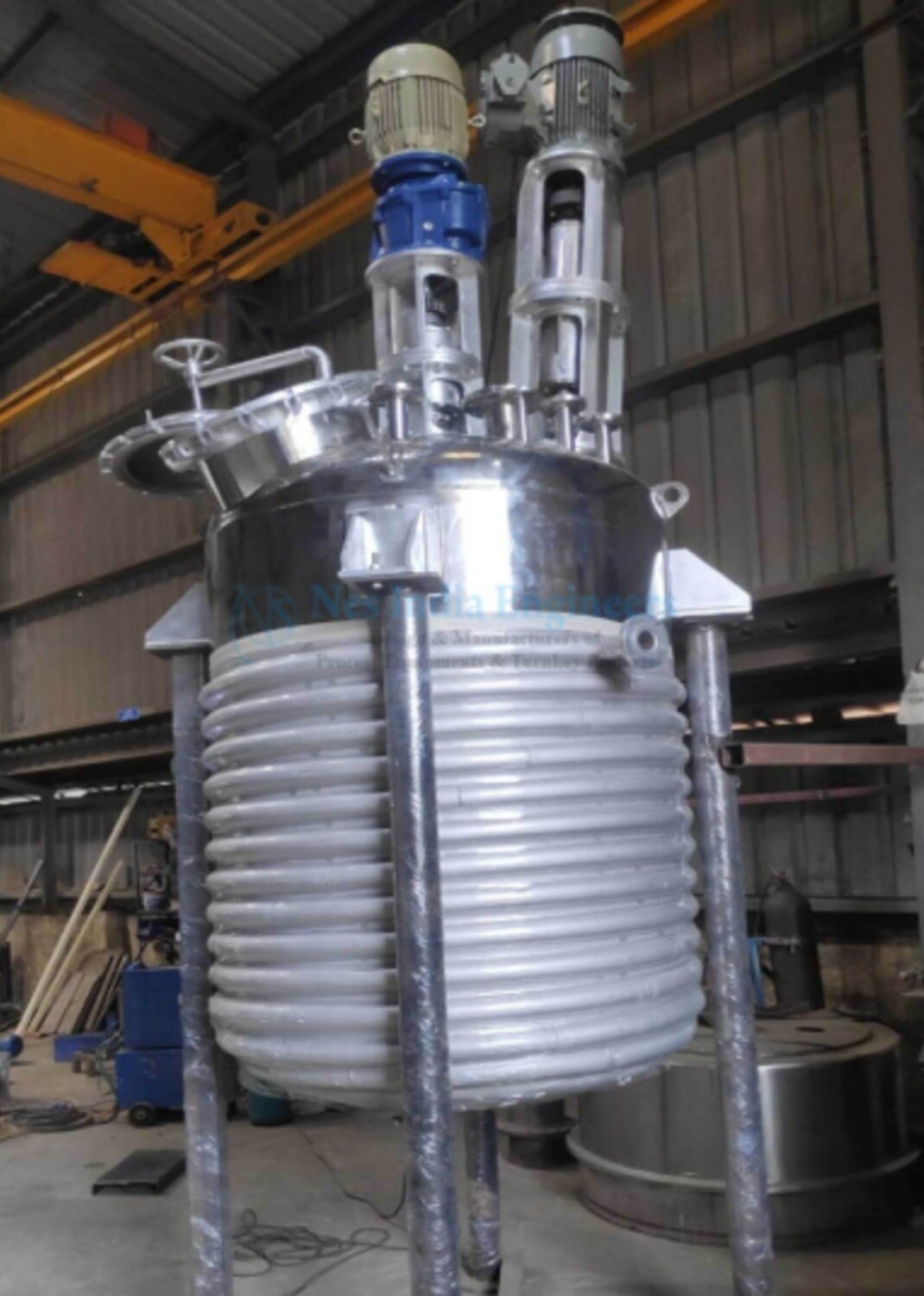
- Request a datasheet stating working volume, minimum and maximum fill, headspace, agitator type, speed range, motor power, torque, baffles, jacket duty, nozzle schedule, and drain orientation.
- Confirm the grade and corrosion allowance for every wetted part. Phosphoric acid, sulfuric acid, ammonium solutions, chloride-bearing micronutrients, and nitrate service do not justify choosing stainless steel by grade name alone.
- Check design and operating pressure, design temperature, heating and cooling limits, and vacuum rating during cooling, draining, condensation, or blocked venting. Require the applicable code, such as ASME BPVC Section VIII or the relevant Indian code.
- Review crystallisation controls: temperature probes, insulation, outlet heating, rapid drainage, closed charging, and procedures for retained solids. Inspect baffles, coils, spray devices, shafts, seals, and bottom outlets for dead zones and cleaning access.
- Specify seal material and seal plan, clean-in-place method, spray coverage, surface finish, drainability, high-temperature and high-level trips, compatible instruments, emergency dilution or discharge, and controls against organic or combustible contamination.
- Put acceptance testing in the purchase order: leak, pressure or vacuum, agitator rotation and torque, temperature-control, drainability, cleanability, and suspension or mixing-performance tests using representative fertilizer.
Nes India Engineers is worth comparing when its process-equipment capability matches this duty, but assess the submitted calculations and test plan rather than the company label. That is the useful distinction when selecting fertilizer process equipment in Pune or a mixing vessel manufacturer for fertilizer production applications in Pune.
Related product
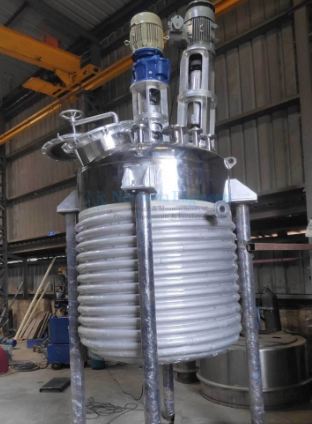 | Mixing Vessel Nes India Engineers are the most leading Manufacturers, Suppliers, Exporters of Mixing Vessel in India, Pune, Aurangabad, Goa, Chennai, Mumbai,... View product → |
Frequently asked questions
Which fertilizer products need a mixing vessel?
Use a fertilizer mixing vessel for urea solution, ammonium nitrate solution, UAN, NPK slurry, micronutrient suspension, liquid fertilizer, and fertilizer coating solution. Dry bulk blends usually require a ribbon or double-cone blender instead.
How does a mixing vessel fit into a fertilizer production line?
The vessel receives measured liquid and solid ingredients, mixes them under controlled agitation, and sends the finished solution, suspension, slurry, or coating liquid to storage, filling, granulation, or coating equipment.
Should you choose a vessel, blender, reactor, or spray dryer?
Choose a vessel for liquid batches, a blender for dry solids, a reactor when chemical reaction and temperature control are central, and a spray dryer when you need to convert a liquid feed into dry powder.
How do you size a fertilizer mixing vessel and agitator?
Define batch volume, working and fill levels, density, viscosity, solids concentration, particle size, dissolution time, temperature, heat-transfer duty, mixing time, and required discharge rate before selecting the vessel, impeller, shaft, and drive.
What should you verify in a Pune mixing-vessel quotation?
Check the material of construction, vessel volume, design pressure and temperature, agitator type and speed range, motor rating, seal arrangement, nozzle schedule, heating or cooling system, surface finish, inspection records, testing, drawings, delivery scope, and after-sales support.