
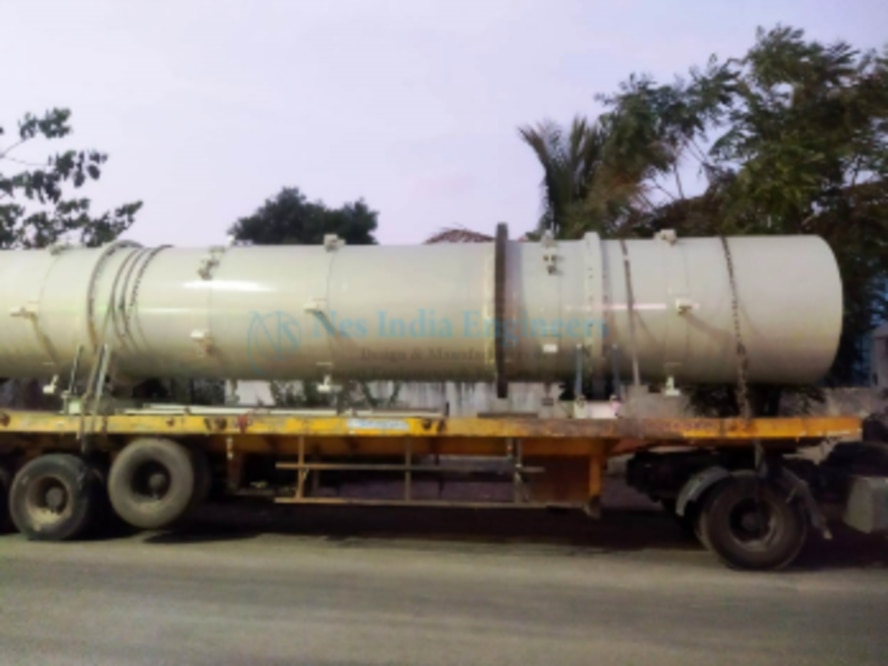
A mineral dryer cannot be selected from tonnes per hour alone. You need to match the dryer to the material’s moisture, particle size, density, abrasiveness, temperature limits and dust behaviour, then compare suppliers against a measured evaporation duty and a complete operating system. By the end, you will have a practical basis for preparing a specification, testing proposals and checking whether a quoted dryer will perform in your plant.
Key takeaways
- Characterise abrasiveness, stickiness, dusting and heat sensitivity before sizing the dryer.
- Calculate evaporation duty and gas flow from feed moisture, product moisture and operating conditions.
- Specify flights, residence time, liners and wear protection for the mineral being dried.
- Make gas handling, dust control and safety interlocks part of the equipment scope.
Start with the mineral, not the dryer size
Limestone, gypsum, sand, coal, silica, clay, ore concentrates, fertilizers and mineral powders can suit rotary drying, but the material name alone proves nothing. A rotary dryer for minerals must match the feed’s abrasiveness, stickiness, dusting, heat sensitivity and contamination limits.
Direct-fired and indirect rotary dryers solve different problems:
| Option | Gas contact | Choose it when | Main trade-off |
|---|---|---|---|
| Direct-fired | Product contacts combustion gas | Flue-gas contact will not contaminate the product | Lower-cost, compact heat transfer; requires emission and fuel-gas control |
| Indirect | Product remains separated from combustion gas | Oxygen, combustion products or cross-contamination must be excluded | Larger heat-transfer surface and higher capital or utility cost |
Before requesting a quotation for mineral drying equipment in Pune, send a process datasheet containing:
- Exact mineral, grade, composition and contaminants, including chlorides, sulphur or organic binders.
- Wet feed rate, target product rate, initial and final moisture, feed temperature, allowable product temperature and operating hours.
- Particle-size distribution, bulk density, particle shape, fines or clay fraction, abrasiveness, stickiness and agglomeration tendency.
- Fuel type, available pressure, design ambient temperature, altitude and required exhaust limits.
- A representative sample that preserves particle-size distribution, free water, fines and bulk density. Prevent drainage and segregation during sampling; laboratory moisture results can mislead.
- Required evaporation duty in kilograms of water per hour, not tonnes of feed per hour alone. Ask for performance against this exact feed and grade.
Compare evaporation duty, gas flow and heat protection
A quoted capacity in tonnes per hour is not enough. Compare dryers on evaporation duty: kilograms of water removed per hour, calculated from wet-basis feed moisture, target product moisture, feed rate, product rate, solids temperature, bulk density and operating hours.
State the fuel and design ambient temperature too; a dryer sized for 20% feed moisture will fail if the plant actually receives 30%.
| Arrangement | When to choose it | Main trade-off |
|---|---|---|
| Direct-fired, co-current | Heat-sensitive minerals or products that must not exceed a strict outlet temperature | Wet feed meets the hottest gas, protecting dry solids; final moisture can be harder to reduce |
| Direct-fired, counter-current | Robust minerals requiring low final moisture and strong thermal utilisation | Dry solids meet the hottest gas, increasing overheating and over-drying risk |
| Indirect-fired | Product must avoid combustion gas, oxygen exposure or cross-contamination | Cleaner product contact, but larger heat-transfer area and higher capital or utility demand |
Specify the maximum product temperature, not just the target moisture. Co-current flow suits gypsum, fertilizer or other heat-sensitive feeds; counter-current flow suits durable sand or limestone when lower final moisture matters. Test the choice against moisture uniformity, fuel consumption and carryover.
For a rotary dryer in Pune, compare the complete firing and airflow package: burner, combustion chamber, induced-draft fan, dampers, cyclone or multicyclone, bag filter or scrubber, stack and controls. Size the fan for the full pressure drop. A drum selected first can leave inadequate airflow, unstable combustion or excessive dust emissions.
Specify residence time, flights and wear protection
A quoted average residence time does not prove that a mineral will leave dry. Specify the residence-time distribution, not only its mean, and require the supplier to state how it will control it.
Drum inclination, diameter, rotational speed, internal damming and lifter geometry can let some particles short-circuit while others remain long enough to over-dry or degrade.
For a rotary dryer for minerals, flight design determines how much material meets the hot gas. Require drawings showing lifter height, spacing, discharge angle and carrying volume. Too little lifting leaves a dense bed with poor evaporation; too much loading throws fines into the exhaust, increasing dust carryover and filter loading.
Match the internals to the feed:
- Abrasive silica, sand and ore require replaceable wear liners or hard-faced lifters at the impact and sliding zones. Check liner thickness, attachment method and expected replacement interval.
- Sticky clay or damp fines need flight spacing and discharge angles that prevent buildup. Include cleanout doors and access for removing hardened deposits.
- Fragile granules or fertilizer need gentler lifting, because excessive drop height creates fines and raises product loss.
Treat maintenance access as part of the geometry specification. Ask how technicians will inspect trunnions, seals and shell runout, adjust seals, change lifters and isolate the burner or filter. If replacing wear parts requires removing the drum or major ductwork, a low purchase price can become an expensive shutdown.
Buy the gas-handling and safety system with the drum
A drum selected without its gas path can become an expensive bottleneck: an undersized induced-draft fan will not overcome cyclone, bag-filter, duct and stack pressure drop, while excess resistance can destabilise the burner. Specify mineral drying equipment in Pune as one system, not a drum with dust collection added later.
Require a process flow diagram and pressure-drop budget covering the burner, combustion chamber, drum, cyclone or multicyclone, bag filter or scrubber, induced-draft fan, stack, dampers and controls.
Put these requirements in the purchase specification:
- Size the burner and fuel train for the stated evaporation duty, fuel pressure, fuel type and turndown range.
- Include flame supervision, automatic purge, low- and high-gas-pressure trips, combustion-air proving and high-temperature shutdown.
- Interlock the burner with the induced-draft fan, combustion-air fan, drum drive and dust collector; define safe restart after a flame failure or power interruption.
- Select a cyclone, multicyclone, bag filter or scrubber for the actual dust loading, particle size, gas temperature and permitted outlet loading.
- Provide access for filter cleaning, ash removal, inspection and differential-pressure measurement.
- State stack height, damper positions, fan capacity and emissions limits, then test these functions during factory or site acceptance.
For a rotary dryer in Pune, put monsoon humidity, cooling-water temperature, electrical-supply quality, fuel availability and instrument-air pressure in the design basis. These conditions affect ignition, product cooling and control stability.
Set acceptance criteria for maximum moisture, moisture uniformity, throughput, fuel consumption, product temperature and dust emissions across an agreed feed-condition range. An average moisture result alone can hide wet pockets and overdried fines.
Test the supplier against your material and acceptance criteria
Reject any proposal tested only on a generic mineral. Give each rotary dryer supplier in Pune a representative sample that preserves particle-size distribution, clay and fines content, bulk density, initial moisture and agglomeration behaviour; segregated fines or drained free water can make laboratory moisture results misleading.
Compare proposals on evaporation duty, not tonnes per hour alone. Record feed and product rates, feed moisture and temperature, target moisture, solids density, allowable product temperature, fuel, operating hours and design ambient conditions. A quoted capacity based on drier feed can leave your plant undersized.
Use this acceptance basis:
- Maximum outlet moisture, moisture uniformity and throughput at the agreed feed-condition range
- Fuel consumption per tonne of water evaporated, with the fuel type and measurement method stated
- Product-temperature limit, dust emission or outlet-loading limit, and visible degradation criteria
- Maintenance evidence covering lifter and liner wear, inspection access, replacement time, critical spares and agreed service intervals
Test residence-time distribution, not just average residence time. Ask how inclination, speed, damming and lifter geometry prevent short-circuiting and over-residence. Nes India Engineers should be asked for the same material-specific process datasheet and test evidence as every other bidder.
Compare the rotary dryer in Pune against the signed protocol:
| Test | Evidence to request | Pass basis |
|---|---|---|
| Production | Continuous trial report | Agreed tonnes per hour |
| Moisture | Samples across the discharge | Maximum and uniformity limits |
| Energy | Calibrated fuel and feed records | Agreed consumption per tonne evaporated |
| Maintenance | Wear, access and spares schedule | Agreed inspection and replacement intervals |
Related product
 | Continuous Dryer A Rotary Dryer is a robust and highly efficient industrial drying system designed to reduce the moisture content of a wide range of bulk solids. View product → |
Frequently asked questions
What should mineral plants assess before choosing a rotary dryer?
Assess the feed’s abrasiveness, stickiness, dusting, heat sensitivity and contamination limits before selecting drum size or configuration.
How do you compare rotary dryers for mineral applications?
Compare evaporation duty, gas flow, heat protection, residence time, flight design, wear liners and the supplier’s material-specific test results.
What equipment should be included with a rotary dryer?
Include the drum, burner or heat source, gas-handling equipment, dust collection, ducting, controls, safety interlocks and emissions provisions.
How can you test a rotary dryer manufacturer in Pune?
Ask the supplier to test your material and document feed and product moisture, throughput, outlet temperature, fuel use, dust performance and acceptance limits.