
A reactor quotation is only as useful as the process information behind it. Define the duty, heat-transfer arrangement, vessel construction, mixing requirements and inspection records first, then compare manufacturers against a specification that reflects your actual batch rather than a nominal vessel size.
Key takeaways
- Match jacket area and utility flow to the batch heat-transfer duty.
- Select the agitator from viscosity, solids content and mixing goals.
- State working volume, design pressure, vacuum and temperature in the quotation.
- Demand pressure tests, material records, drawings and scale-up evidence.
How a Jacketed Reactor Moves Heat Into and Out of the Batch
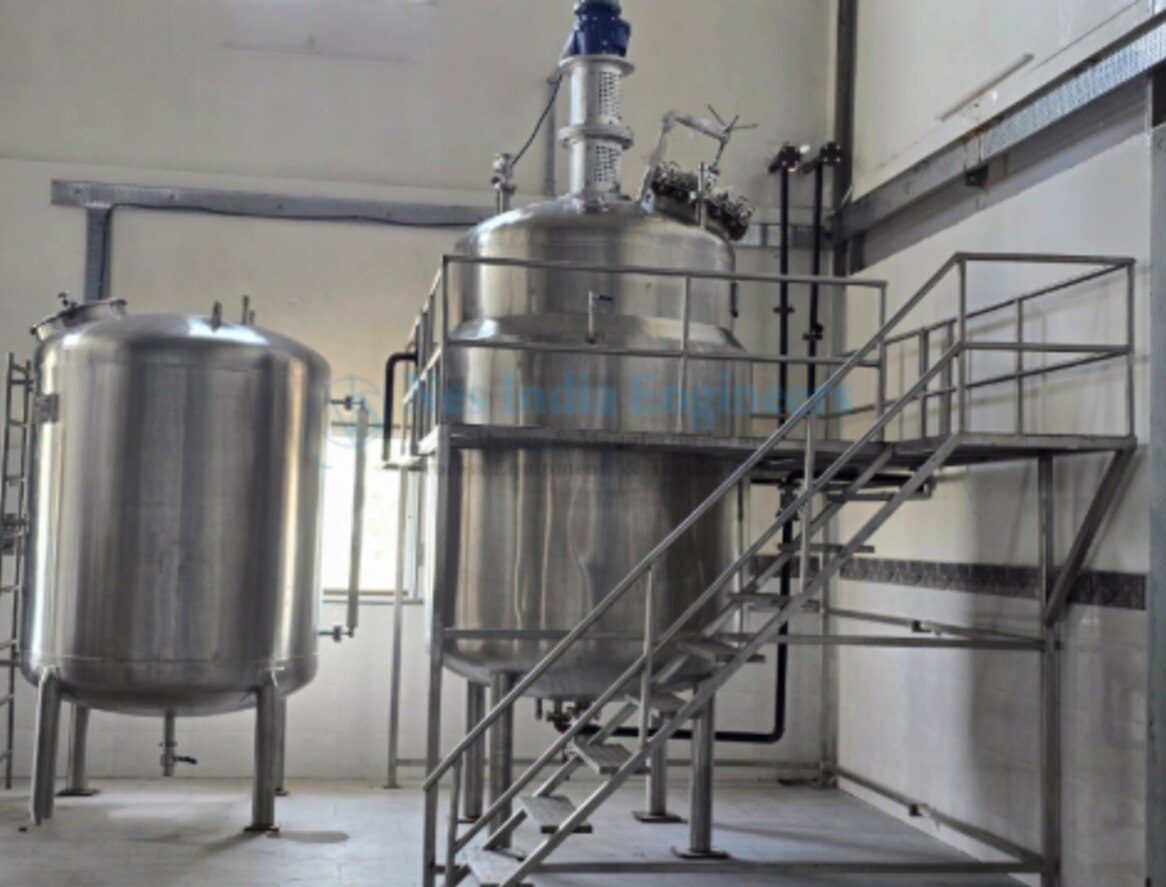
Product temperature is controlled by circulating a heat-transfer medium through the jacket while the batch is mixed inside the vessel. Heating medium enters through the utility inlet and leaves through the utility outlet, carrying heat into the wall; cooling medium reverses that flow of energy when the batch must be cooled.
A functional temperature-control loop includes:
- A circulation pump or plant utility system that moves the heat-transfer medium at the required flow rate.
- A control valve that adjusts steam, hot water, thermal oil or chilled fluid entering the jacket.
- A product temperature sensor positioned where agitation produces a representative batch reading.
- A controller that compares measured temperature with the set point and opens or closes the valve.
- A jacket outlet and condensate-drain arrangement that prevents trapped fluid from restricting heat transfer.
Steam service fails when condensate cannot drain. Poorly located traps, undersized drains or trapped non-condensable gas create cold areas, temperature stratification, water hammer and unstable batch control. Place the trap and drain for reliable condensate removal, not as an afterthought.
The jacket must match the duty, not merely the vessel’s gross volume. Viscosity, agitation, required ramp rate, utility temperature and pressure determine the practical heat-transfer area. A low batch level can leave surfaces poorly wetted, while a high-viscosity batch can remain near the wall despite agitation.
For vacuum drying, check external-pressure stability as well as internal pressure rating. The vessel head, nozzles, sight glasses, agitator seal and jacket cavities all form part of that vacuum-safety assessment.
Choosing the Right Jacket and Agitator for the Process
Match the jacket to the utility pressure, heat-transfer area and fluid behaviour—not to vessel volume alone. Then match the agitator to viscosity, solids loading and the minimum liquid level needed to keep the batch moving.
| Option | What it means | When it applies |
|---|---|---|
| single jacket | Continuous shell around the vessel | General heating and cooling for low-to-medium viscosity liquids at moderate jacket pressure |
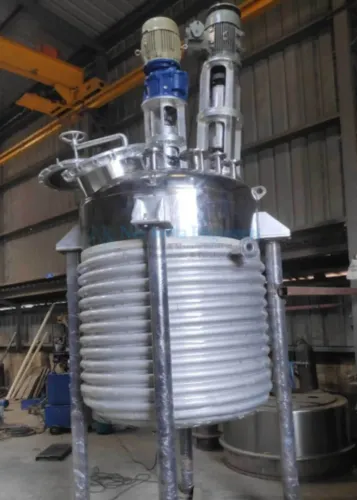
| half-pipe coil | Welded half-pipe sections wrapped around the shell | High jacket pressure, high mechanical loading or demanding heat-transfer duty; the coil also provides strong circulation |
| dimple jacket | Formed pockets welded to the vessel wall | Moderate pressure and duty where lower cost and low jacket-side pressure drop matter |
| internal coil | Heat-transfer tubing inside the batch | Limited external area or difficult heat removal, but only after checking cleaning, fouling and agitator clearance |
Use an anchor agitator with wall scrapers for viscous fluids; it keeps product against the heated wall and reduces stagnant layers. Use a pitched-blade turbine or hydrofoil for lower-viscosity liquids that need bulk circulation, gas dispersion or solids suspension. A high-shear head suits emulsification, not necessarily heat transfer.
Size the agitator for the validated minimum and maximum working volumes. A low-level batch can uncover the blades, while a high-viscosity batch can overload the drive during start-up. For vacuum drying, check vessel and jacket external-pressure stability, because full vacuum can buckle shells, heads or jacket cavities even when internal-pressure calculations pass.
Build the Quotation Around Duty, Volume and Heat-Transfer Calculations
A batch size is not the same as vessel capacity. State the required working volume as a minimum and maximum validated operating range, then show the gross vessel volume and headspace needed for foaming, gas evolution, reflux and safe charging. A full vessel can leave too little room for expansion or mixing.
1. Give the batch size, liquid density, solids content and charge sequence. Identify the lowest and highest fill levels that still provide agitator submergence, heat-transfer surface wetting, effective discharge and clean drainage.
2. State the initial and target temperatures, reaction time, heating rate, cooling rate and required heat-removal load in kW. Include the heat of reaction, evaporation or crystallisation if it affects the calculation.
3. Describe the worst-case batch state, not only the starting liquid. Provide viscosity at relevant temperatures, slurry or solids behaviour, yield stress, gas evolution and any change to a high-viscosity or partially dried mass.
4. Specify available heating and cooling utilities: steam pressure, hot-oil temperature, chilled-water temperature, flow limits and allowable utility-side pressure drop. These figures determine whether a conventional jacket, half-pipe coil, dimple jacket or internal coil can deliver the duty.
5. Provide operating pressure, vacuum requirement, atmosphere, hazardous chemistry and seal-utility requirements. For steam, ask the quotation to show condensate outlets, trap locations and non-condensable-gas removal; poor drainage causes unstable temperature control and water hammer.
Request the supplier’s heat-transfer area, duty calculation, ramp-time estimate and agitator torque at minimum and maximum working volume. That turns a vessel price into a process-based quotation.
Specify Materials, Pressure, Vacuum and Cleanable Construction
Set the specification from process chemistry, pressure and vacuum exposure, and cleaning access—not from vessel volume alone. Confirm the process-side and jacket-side design pressure and temperature separately, including steam, thermal oil, cooling water, nitrogen, and upset conditions.
Choose the product-contact material against the actual chemistry:
- SS 304 suits less aggressive service only after checking chlorides, acids, alkalis, temperature, and cleaning agents.
- SS 316L offers better resistance in many pharmaceutical and chemical duties, but chloride concentration, pH, oxidizers, crevices, weld heat tint, and temperature still require validation.
- A glass-lined reactor suits corrosive chemistry that would attack stainless steel, provided you control mechanical impact, thermal shock, lining inspection, and nozzle or agitator-area limitations.
For vacuum drying, require an external-pressure calculation for full vacuum. Internal pressure design does not prove stability: the review must cover shell and head geometry, stiffening rings, nozzles, sight glasses, agitator seals, and every jacket cavity. Specify minimum and maximum operating pressure, relief settings, vacuum-breaker arrangement, and leak-test method.
For solvent or flammable service, define inert-gas capability, bonding and grounding, hazardous-area electrical equipment, relief protection, and the documented area-classification basis. A pressure-rated vessel does not make a general-purpose motor safe.
Specify orbital or manual weld procedures, inspection records, drainable connections, flush sanitary joints, accessible seals, and the required surface finish. Electropolishing can improve smoothness, but it cannot repair lack-of-fusion welds, undercut, trapped contamination, dead legs, or poor drainage.
Compare Manufacturers Through Testing, Documentation and Scale-Up Evidence
A usable reactor is demonstrated by repeatable test records, validated operating limits and a complete turnover dossier—not by vessel dimensions and a low quotation. Require every bidder to state what it will test, how it will record the result and which acceptance criterion applies.
| Evidence | Usable manufacturer | Quote-only warning |
|---|---|---|
| Factory acceptance test | Reproducible pressure or leak test, agitator runout or balance data, instrument calibration and functional checks | “Tested to standard” without procedures, readings or signed records |
| Fabrication control | Material certificates, weld maps, qualified weld procedures and welders, weld inspection reports and surface-finish records | Material grade and “quality welding” stated without traceability |
| Scale-up | Minimum and maximum validated batch volumes with agitation, heat-transfer, wetting, vortexing and drain limitations | One gross volume presented as the full usable range |
Ask for the agitator seal specification, barrier or buffer-fluid arrangement, leakage detection, vent route and the consequence of losing seal utility. For solvent or oxygen-sensitive service, demand the hazardous-area basis, grounding method, inert-gas provisions and relief design.
For vacuum drying, require calculations for external-pressure stability covering heads, stiffening rings, nozzles, sight glasses, agitator seal and jacket cavities. Dye-penetrant inspection finds surface-breaking defects; it does not prove internal weld integrity where radiographic or ultrasonic examination is required.
If Nes India Engineers bids, apply these same evidence checks: a documented factory acceptance test and turnover dossier matter more than a promising fabrication schedule.
Frequently asked questions
How does a jacketed reactor heat or cool a batch?
A heat-transfer medium circulates through the jacket around the vessel wall. The medium transfers heat through the wall into or out of the mixed batch, then exits through the utility outlet.
How do you choose a jacket and agitator?
Choose the jacket from required heat-transfer area, utility temperature, flow and pressure. Choose the agitator from viscosity, solids content, mixing time, shear and the need to suspend or disperse materials.
What information should a jacketed reactor quotation include?
Provide batch volume, working and total vessel volume, heating and cooling duties, operating temperatures, utility conditions, pressure, vacuum, materials and cleaning requirements. Ask the manufacturer to show the heat-transfer calculations.
What should you compare between jacketed reactor manufacturers?
Compare pressure and vacuum testing, material certificates, weld records, surface-finish records, inspection documents, drawings, controls documentation and evidence that the design scales from laboratory or pilot batches.