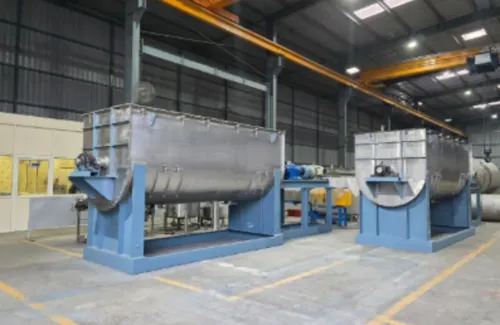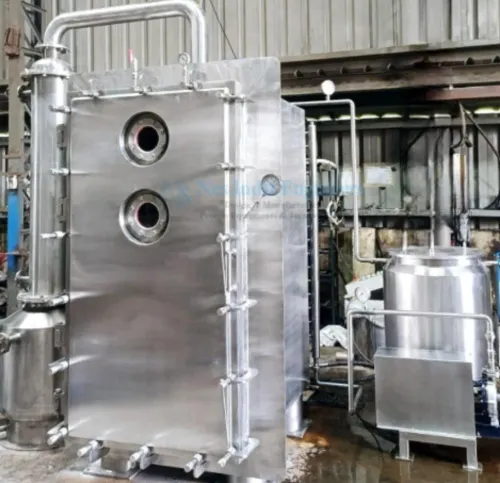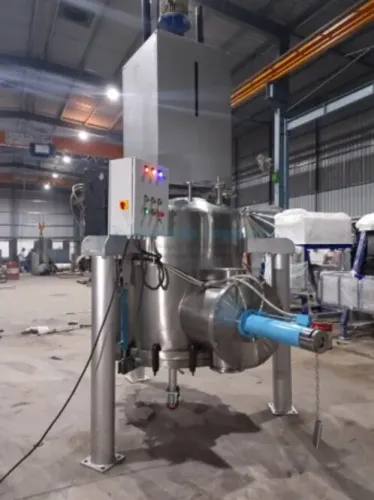

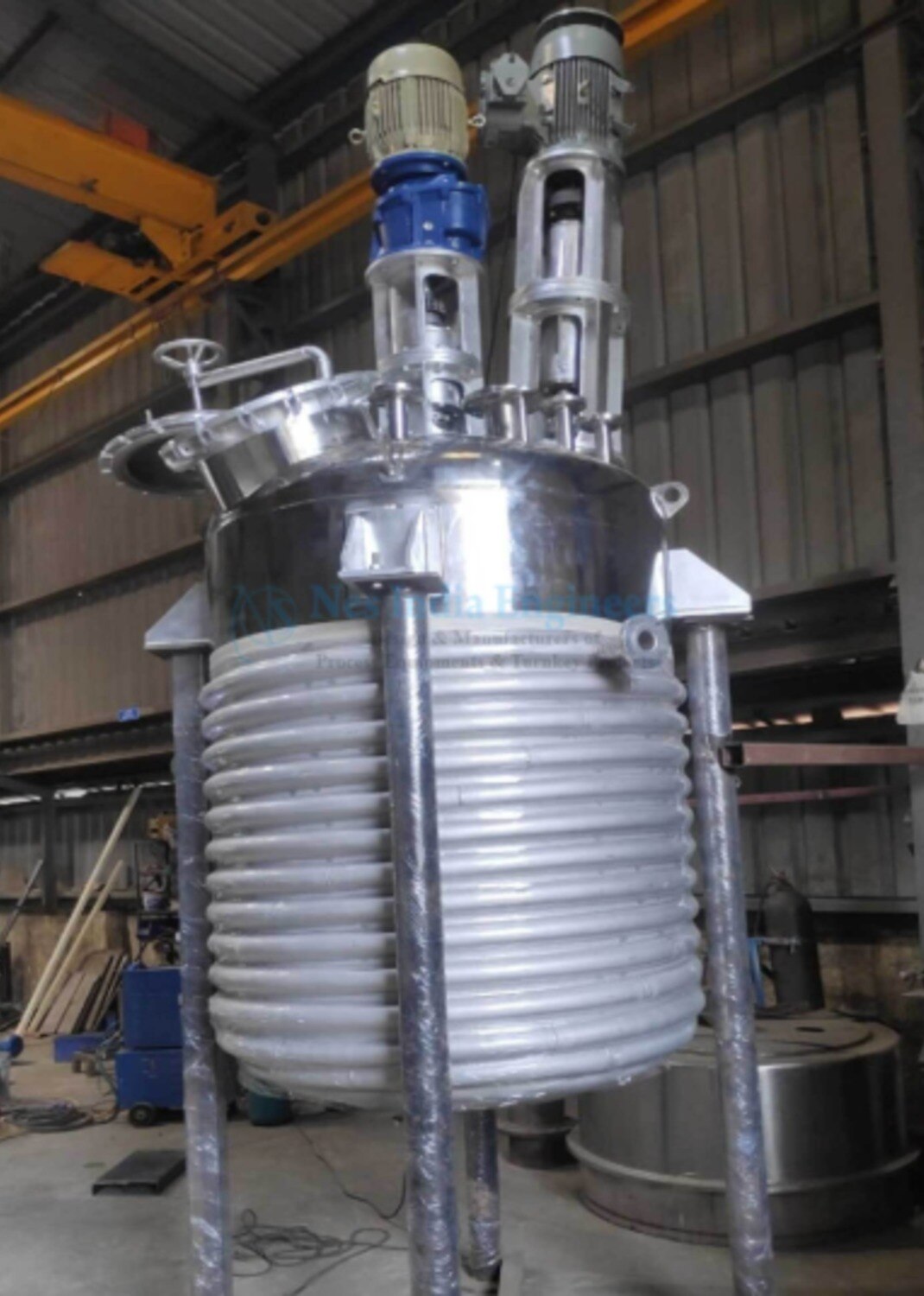
Bengaluru’s monsoon humidity, summer cooling limits and changing campaign demand affect far more than vessel material. By comparing vessel configuration, working volume, agitation, heat transfer, hygiene, controls and supplier documentation, you can specify equipment that remains usable across seasonal production rather than sizing it for average conditions.
Key takeaways
- Seal instruments and access points against monsoon moisture ingress.
- Size the vessel from working volume, batch variation and headspace requirements.
- Match agitator type, heat transfer and materials to product behaviour.
- Compare safety, controls, maintenance and downtime before approving the vessel.
Why Bengaluru’s seasons change the vessel specification
Monsoon humidity, summer heat and uneven campaign demand determine the basic mixing vessel design in Bengaluru. From June through September, moisture can condense on cold surfaces, enter through poorly sealed instruments and raise the moisture content of dry powders.
A closed, insulated vessel with sealed instrumentation, protected electrical connections and controlled powder charging gives better protection than an open tank.
Ambient temperature changes the heat-transfer duty. A vessel in a non-air-conditioned production area needs more cooling during hot-season batches than the same vessel in a controlled room. Size the jacket and chiller against the site’s design summer ambient and actual cooling-water temperature, not the vendor’s nominal utility conditions.
Verify these site conditions before fixing batch time or vessel volume:
- Monsoon water quality and availability
- Summer cooling-water temperature
- Electrical supply stability
- Chilled-water, compressed-air and clean-steam capacity
Fluctuating demand makes an oversized vessel as troublesome as an undersized one. Excess headspace can weaken mixing, while insufficient capacity causes foaming, splashing and unsafe charging; select a batch vessel that handles the planned campaign range with agitator speed control and practical working-volume limits.
If vacuum deaeration, solvent handling or low-temperature evaporation is required, specify the external-pressure rating too: connecting an atmospheric vessel to a vacuum pump can buckle its shell. A mixing vessel built around the worst credible seasonal condition will remain usable when demand and utilities shift.
Choose the vessel configuration and size for the real batch
Choose a closed, jacketed, fixed batch vessel when the product needs controlled temperature, protected headspace, repeatable batch residence time, or validated cleaning. That is the defensible default for many Bengaluru mixing vessel applications: the jacket supplies or removes heat, while the closed shell limits monsoon moisture and contamination.
Select an open, mobile vessel only when the product tolerates ambient exposure, needs frequent movement, and requires no controlled heat transfer or vacuum. Use a continuous mixer only when feed rates, composition, residence time, and downstream demand remain stable.
| Configuration | Strength | Choose it when |
|---|---|---|
| Closed, jacketed, fixed batch | Containment, heat control and repeatable processing | Batches need temperature control, CIP or SIP, solvent containment, or protection from humid air |
| Open, mobile, atmospheric | Simple access and flexible positioning | The product is non-hazardous, non-hygroscopic and unaffected by ambient temperature |
| Continuous mixer | High throughput with steady residence time | Feed composition and demand remain stable across the campaign |
For an industrial mixing vessel using vacuum deaeration or solvent handling, specify external-pressure resistance as well as internal pressure resistance. A vacuum pump does not make an atmospheric vessel vacuum-rated.
Size the vessel from working volume, not total capacity.
- Leave headspace for foam, vortexing, solids charging and thermal expansion.
- Confirm agitator clearance and drainability at the minimum batch.
- Check summer cooling-water temperature, monsoon water quality, chilled-water capacity and electrical stability before fixing batch time.
- Specify 316L, surface finish, weld quality, gasket compatibility and validated CIP requirements when hygienic production applies.
Match the agitator, heat-transfer system and construction material to the product
Select the agitator from viscosity, solids loading and shear sensitivity, not from vessel diameter alone. A mixing vessel that circulates a thin liquid can leave a high-viscosity batch stagnant at the wall.
| Agitator | Product condition | Main design concern |
|---|---|---|
| Propeller or pitched-blade turbine | Low-viscosity liquids and dissolving salts | Excess speed can create a vortex and entrain air |
| Anchor with wall scraper | Viscous creams, syrups and heat-sensitive products | Scraper clearance must match the wall finish |
| Helical ribbon | High-viscosity products with limited flow | Requires adequate torque and gearbox capacity |
| Rotor-stator head | Emulsions, dispersions and agglomerate reduction | Local shear can heat or damage the product |
Use a jacket for controlled heating or cooling, with the utility selected for the duty: hot water or steam for heating, and chilled water or glycol when summer cooling demand exceeds cooling-tower performance. Jacket area, fill level, fouling and agitator circulation determine actual heat-transfer time; a jacket alone does not guarantee temperature control.
For pharmaceutical mixing vessel applications, 316L stainless steel suits many product-contact duties, but specify the internal surface finish, orbital-weld quality, gasket elastomer, chemical compatibility and pressure or vacuum rating. The industrial mixing vessel must drain by gravity without pockets at the outlet, seal, sample valve or instrument branch.
Require validated CIP spray coverage when products change frequently. Add SIP capability only when the process requires sterilisation, because it increases utility, seal and instrumentation demands. These features make the mixing vessel fit its mixing vessel applications rather than merely contain the batch.
Design for humidity, controls, safety and seasonal downtime
Condensation can corrode terminals, dilute hygroscopic powders and contaminate an otherwise closed batch during Bengaluru’s monsoon. Specify an industrial mixing vessel with sealed instrument enclosures, hygienic cable glands, a high-accuracy RTD, level measurement, pressure and vacuum indication, and a validated low-point drain.
Specify these controls for the seasonal production equipment:
- Use a closed, insulated vessel with a jacket sized for the site’s design summer ambient and actual cooling-water temperature.
- Confirm chilled water, cooling water, compressed air and clean steam capacity at their worst credible seasonal conditions.
- Fit a dehumidified or filtered powder-charging point; never leave an open manway exposed during charging.
- Provide sloped utility lines, drainable jackets and accessible isolation valves so trapped water cannot remain after shutdown.
- Install a canopy or protected location for the motor, control panel and cable entries, while preserving ventilation around heat-producing equipment.
Solvent service needs Ex-rated instruments and electrical equipment matched to the hazardous-area classification, plus bonding, grounding, vapour containment, mechanical-seal monitoring and a correctly sized pressure-relief device. Stainless steel alone does not make a vessel safe for flammable batches.
Before monsoon operation, inspect gaskets, sight glasses, cable glands, earthing continuity, agitator seals and jacket leaks. During idle periods, drain and dry the vessel, clean and dry the CIP circuit, protect openings from humid air, and record shaft rotation, seal condition and instrument calibration before restart.
A failed seal or wet terminal can stop the first campaign batch.
Use a documented comparison before approving the vessel
Approve the vessel against the worst credible Bengaluru utility condition, not average weather. Record summer cooling-water temperature, monsoon water quality, clean-steam and chilled-water capacity, compressed-air pressure, electrical interruptions, batch size, changeover time and cleaning time before comparing seasonal production equipment.
| Option | Best fit | Evidence required before approval |
|---|---|---|
| Mixing vessel | Liquid-solid reaction, controlled heating or cooling, vacuum, or validated CIP/SIP | Uniformity, heat-transfer, drainability and cleaning results |
| Double cone, octagonal or ribbon blender | Dry powder blending with little or no liquid addition | Blend uniformity, segregation risk and dust-control data |
| Storage tank | Holding material after processing | Agitation adequacy, temperature control and maximum hold time; storage alone does not prove mixing |
| Continuous mixer | Stable, high-throughput feed and residence time | Feed-rate control, residence-time distribution and start-up or shutdown losses |
| Drying equipment | Moisture removal under heated, vacuum or airflow conditions | Final moisture uniformity, drying curve and product-temperature limits; a mixer is not a dryer |
Request the supplier’s GA drawing, P&ID, datasheet, utility-load calculation, agitator torque and power curve, pressure or vacuum design calculation, 316L material certificates, weld-inspection records, surface-finish measurement, gasket and elastomer compatibility statement, and CIP/SIP coverage map. Specify dead-leg limits, gravity drainage and the actual outlet, seal, sample-valve and dip-tube geometry.
Witness a factory acceptance test using a representative viscosity and solids load. Require mixing-uniformity samples, heat-up and cool-down curves at summer utility temperatures, spray-coverage and drainability tests, leak or pressure tests, and motor-load readings. Nes India Engineers should provide these application-specific records rather than a generic mixing vessel catalogue.
Related product
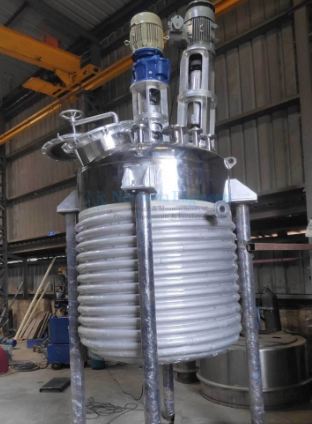 | Mixing Vessel Nes India Engineers are the most leading Manufacturers, Suppliers, Exporters of Mixing Vessel in India, Pune, Aurangabad, Goa, Chennai, Mumbai,... View product → |
Frequently asked questions
Why do Bengaluru’s seasons affect mixing vessel specifications?
Monsoon humidity can cause condensation and moisture ingress, while summer heat affects cooling duty, product temperature and equipment operating conditions.
How do you choose a mixing vessel configuration and size?
Calculate the real batch range, working volume, headspace, cleaning requirements and future campaign variation before selecting vessel dimensions.
How should you match the agitator, heat-transfer system and construction material?
Select the agitator from viscosity, solids content and shear needs; size heating or cooling from the process duty; and choose materials for product compatibility and cleanability.
What seasonal design details matter for humidity, controls and downtime?
Specify sealed instruments, suitable electrical protection, reliable temperature and level control, safe access and maintenance provisions that reduce monsoon and summer interruptions.
How can you compare mixing vessels before approval?
Use a documented comparison covering batch performance, materials, utilities, controls, safety, cleaning, maintenance, delivery and seasonal operating risks.