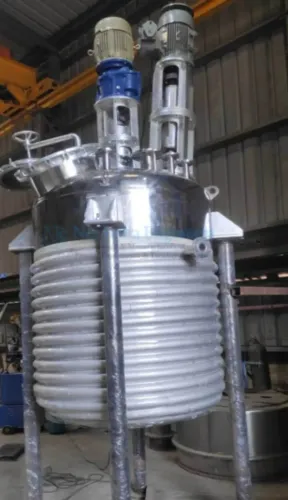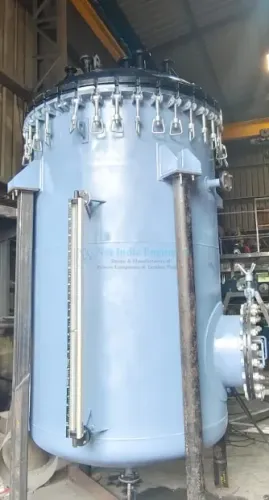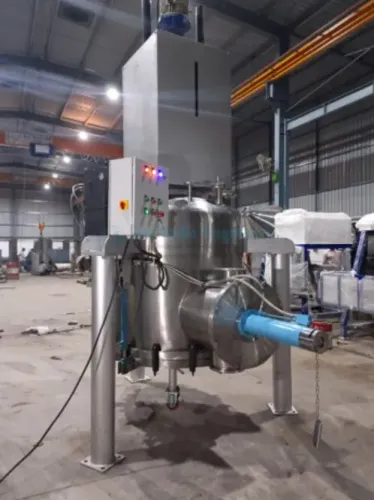

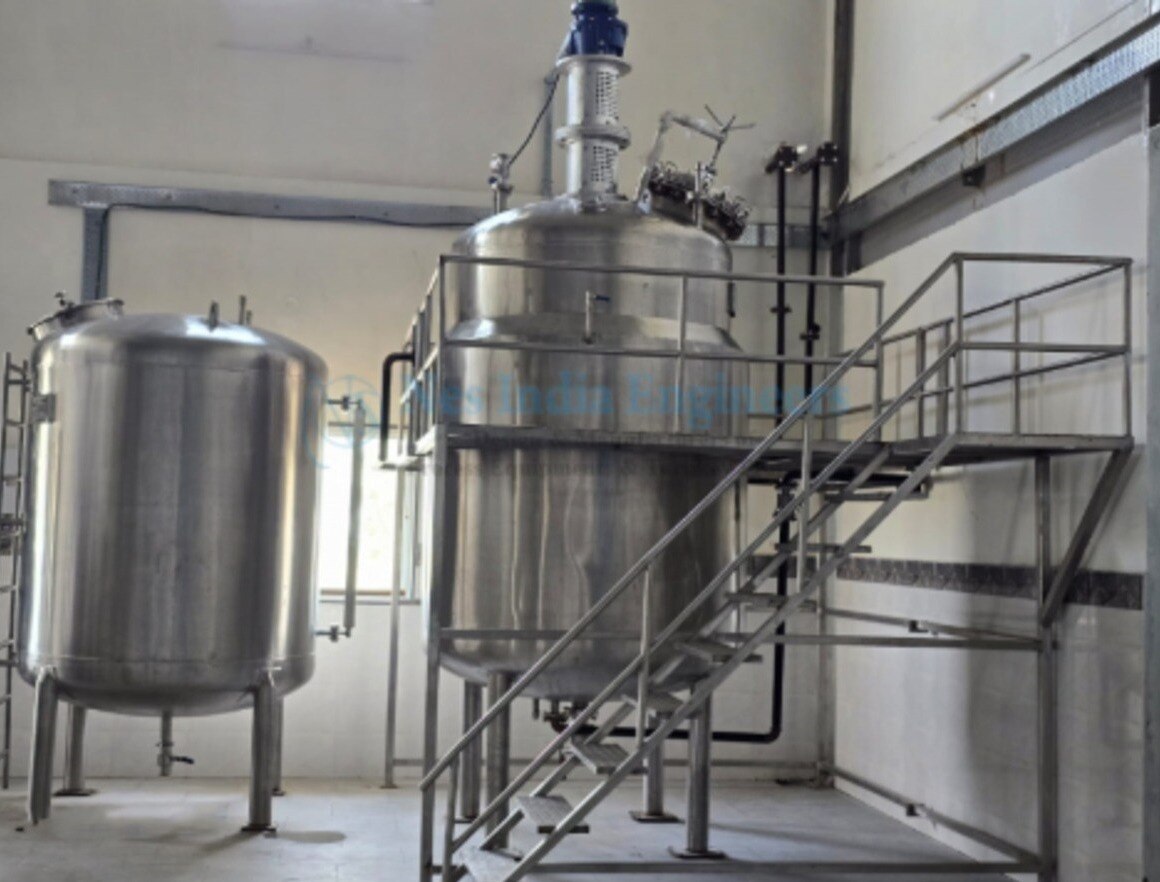
A reactor that holds pressure is not automatically safe, pressure-rated for vacuum, or suitable for pharmaceutical cleaning and contamination control. By the end, you will be able to compare the mechanical specification, hazard controls, hygienic details, and inspection records behind a pressure reactor purchase.
Key takeaways
- Define design pressure, temperature, vacuum, corrosion allowance, and material grade before requesting quotes.
- Use hydrogen detection, inert-gas controls, relief sizing, and emergency cooling for hazardous reactions.
- Specify cleanable seals, validated instrumentation, drainability, and agitation performance—not vessel volume alone.
- Request ASME Section VIII documents, pressure-test reports, material certificates, and calibration records before acceptance.
What Makes a Reactor Suitable for Controlled Pharmaceutical Pressure Processing?
A pharmaceutical pressure reactor is a sealed, agitated vessel built to carry out a reaction or phase operation at controlled pressure and temperature. It combines product-contact surfaces, heat transfer, mixing, instrumentation, and a managed relief path.
A jacketed reactor may be pressure-rated, while an autoclave is intended for sterilisation; a hydrogenator is configured for hydrogen reactions. A standard mixing vessel proves none of these capabilities.
Choose controlled pressure processing when pressure changes the chemistry or phase behaviour: it can raise a solvent’s boiling temperature, support a gas-liquid reaction, prevent evaporation, or enable safer solvent removal under vacuum. Do not select a pressure chemical reactor merely because its catalogue uses the word “pharmaceutical.”
- Define the process window: reaction pressure, vacuum level, temperature, batch volume, solvent, gas, agitation requirement, and the pressure and temperature ramp rates.
- Specify control behaviour, not only setpoints. Record allowable excursions, pressure-control mode, condenser capacity, and the response to a failed transmitter, probe, or control valve.
- Confirm pharmaceutical suitability through product-contact material certificates, weld and surface-finish records, elastomer compatibility, cleanability, and a cleaning strategy covering CIP, manual cleaning, or both.
- Require an independent relief path sized for blocked outlets, trapped-liquid expansion, decomposition, jacket failure, and accidental gas admission. Match the relief valve or rupture disc to fouling risk, chemistry, discharge destination, and inspection access.
Calibration records for pressure, temperature, vacuum, flow, load and torque instruments belong in the equipment file. The right unit is therefore a documented, cleanable, controllable pressure system—not simply a vessel that survives a pressure test.
Which Pressure, Temperature, Vacuum, and Material Ratings Belong in the Specification?
Specify separate limits for design pressure, normal operating pressure, test pressure, design temperature, and vacuum; do not accept one “maximum pressure” figure for a pharmaceutical pressure reactor. Include the maximum credible upset condition, jacket-side limits, agitator-seal conditions, and the applicable inspection code.
| Rating | What to verify | Why it matters |
|---|---|---|
| Design pressure | Internal pressure at the governing design temperature | Normal operation below this value does not cover decomposition, blocked outlets, or inadvertent gas admission |
| Allowable working pressure | Pressure permitted at the actual metal temperature and configuration | A nameplate limit can fall as temperature rises |
| Test pressure | Hydrostatic or approved pneumatic test value and test medium | A test proves test integrity, not continuous operating permission |
| Vacuum rating | Full or specified partial vacuum, with external-pressure stability calculation | Cooling, steam condensation, draining, or sequencing errors can buckle a vessel built only for internal pressure |
| Temperature rating | Vessel, jacket, nozzle, gasket, and seal limits | The weakest component controls the usable range |
| Material rating | Product-contact alloy, corrosion allowance, elastomers, and documented compatibility | Corrosion can reduce wall thickness, contaminate the batch, or destroy sealing |
State total volume, minimum working volume, maximum batch volume, solids fill limit, and required headspace separately. Confirm that the batch expands, foams, generates gas, or changes phase without entering the vapour outlet or agitator.
Request the calculation and certificate trail, not just a brochure: ASME BPVC Section VIII, Division 1 documentation where applicable, material certificates, weld maps, non-destructive examination results, and pressure-test records. Code compliance does not prove hygienic suitability or GMP qualification. A pressure chemical reactor also needs an independent relief path sized for the actual chemistry.
How Do You Control Hydrogen, Solvents, Exotherms, and Runaway-Reaction Hazards?
A relief-valve set pressure does not prove that a reaction is safe. Before controlled pressure processing, complete a HAZOP with reaction calorimetry covering heat-removal failure, lost agitation, wrong-material charging, decomposition, gas generation, blocked outlets, and two-phase relief flow.
Specify the pressure-control mode, ramp rates, allowable excursions, condenser duty, and vacuum limits. Raising pressure changes boiling temperature, solvent-removal rate, reaction concentration, vapor load, and the temperature seen by a heat-sensitive intermediate. Verify pressure, temperature, vacuum, flow, load-cell, and torque instruments, then protect the batch against failed sensors and calibration drift.
Use this hazard-to-safeguard check:
| Hazard | Hardware or analysis | Emergency safeguard |
|---|---|---|
| Hydrogen and solvent vapour | Inert-gas blanketing, oxygen monitoring, bonding and grounding, antistatic design, classified electrical equipment, vapour-compatible vent treatment | Automatic isolation and controlled depressurisation |
| Exotherm or runaway reaction | Reaction calorimetry, jacket-duty review, independent high-temperature and high-pressure trips | Emergency quench, rapid cooling, or transfer to a dump vessel |
| Blocked outlet, decomposition, or gas admission | Independent relief path sized for reactive, possibly two-phase flow; compatible rupture disc and relief valve | Discharge to a documented safe destination, not the workroom |
Confirm that relief devices will not foul, that isolation valves cannot defeat protection, and that the discharge destination handles toxic, flammable, or corrosive contents. Define emergency cooling, agitation backup, quench chemistry, dump capacity, alarms, interlocks, and operator actions before charging materials.
A pressure vessel that withstands the event is not enough if the process control system cannot detect it.
How Should You Specify Seals, Valves, Agitation, Cleaning, and Instrumentation?
Select every product-contact part for the chemistry, temperature, pressure, vacuum, and cleaning cycle—not for pressure rating alone. Specify the wetted metal grade, surface finish, weld quality, drainability, and access for inspection. For a pharmaceutical pressure reactor, cleaning design must cover the hardest-to-clean product and equipment locations before fabrication.
- Seals: name the elastomer or polymer, temperature and chemical limits, extractables requirements, certificate, and replacement interval. Choose a flushed or double mechanical seal when leakage could contaminate the batch or expose operators.
- Valves: specify diaphragm, bottom-outlet, or other hygienic designs where appropriate; eliminate stagnant pockets, inaccessible cavities, and dead legs that retain product or cleaning fluid.
- Agitation: define impeller type, shaft finish, clearance, speed range, torque margin, and seal arrangement. Confirm that the agitator does not create uncleanable shadow areas.
- Cleaning: state whether the unit uses CIP, manual cleaning, or a hybrid. Identify spray-device coverage, drain points, rinse criteria, visual inspection points, and cleaning-validation locations.
- Instrumentation: identify pressure, temperature, vacuum, load-cell, torque, and flow instruments as critical or noncritical, with range, accuracy, response time, calibration interval, and alarm limits.
Place temperature probes where they represent the batch, not merely the jacket. Protect control logic against failed or drifting sensors with alarms, interlocks, and defined safe states.
Require calibration and verification records, cleaning coverage tests, seal certificates, and inspection access in the equipment dossier; a vessel that holds pressure can still release an uncontrolled batch if its monitoring system fails.
Which Codes, Tests, and Records Should You Request Before Acceptance?
A pressure-vessel fabricator proves containment; a pressure reactor manufacturer proves controlled, cleanable, traceable processing. The phrase pressure reactor manufacturer for pharmaceutical production in Pune is not evidence by itself.
| Evidence | Pressure-vessel fabricator | Pharmaceutical-capable supplier |
|---|---|---|
| Design basis | Shell pressure and volume | Design pressure and temperature, vacuum rating, jacket limits, upset conditions, corrosion allowance, and product-contact material list |
| Fabrication file | Vessel drawings and pressure test | Material certificates, weld map, WPS/PQR, welder qualifications, radiography or other NDE reports, surface-finish readings, and nameplate data |
| Component control | Standard gaskets and valves | Elastomer certificates, seal-face materials, instrument calibration, relief-device certificates, and cleanability records |
| Acceptance scope | Hydrostatic test | Pressure and leak tests plus agitation, controls, alarms, interlocks, cleaning coverage, and utility checks |
Request the completed dossier before factory acceptance. The hydrostatic record must identify test pressure, medium, duration, gauge calibration, and acceptance result; a certificate stating “tested satisfactory” is weak evidence. Check that drawings match the built vessel, including sampling valves, dip pipes, baffles, seals, transfer lines, and relief discharge.
At site acceptance, verify actual steam, cooling-water, vacuum, nitrogen, electrical, and drain connections. Run the control sequence and challenge high-pressure, high-temperature, low-level, loss-of-agitation, and emergency-stop interlocks. Confirm the cleaning procedure—CIP, manual, or hybrid—reaches the hardest-to-clean location and supports later cleaning validation.
If Nes India Engineers is under consideration, ask it to identify the applicable pressure-vessel code, inspection authority, and GMP-relevant records for the specific batch reactor rather than relying on the terms pressure chemical reactor or pressure reactor manufacturer.
Related product
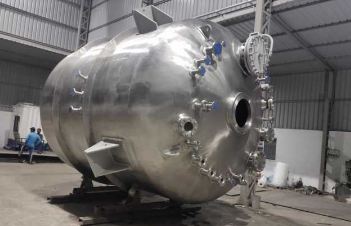 | Chemical Reactor What Is A Chemical Reactor? These devices can be used to help with the chemical reaction process. View product → |
Frequently asked questions
What makes a reactor suitable for controlled pharmaceutical pressure processing?
Specify a sealed, agitated vessel with validated temperature and pressure measurement, effective heat transfer, cleanable product-contact surfaces, a managed relief path, and complete drainability.
Which ratings belong in a pharmaceutical pressure reactor specification?
State design and operating pressure, full vacuum rating, design and operating temperature, corrosion allowance, vessel volume, jacket or coil rating, material grade, and the required agitation range.
How do you control hydrogen, solvents, exotherms, and runaway-reaction hazards?
Define inert-gas purging, oxygen and hydrogen monitoring, solvent containment, relief-device sizing, emergency cooling, high-temperature and high-pressure trips, and an emergency shutdown sequence.
What should you specify for seals, valves, agitation, cleaning, and instrumentation?
Select seals compatible with the solvent and temperature, hygienic valves, an agitator matched to viscosity and solids, cleanable internal geometry, calibrated sensors, and documented control-system alarms.
Which codes, tests, and records should you request before acceptance?
Request the applicable pressure-vessel code documents, design calculations, weld records, material certificates, inspection reports, pressure-test results, relief-device certificates, instrument calibrations, and final drawings.