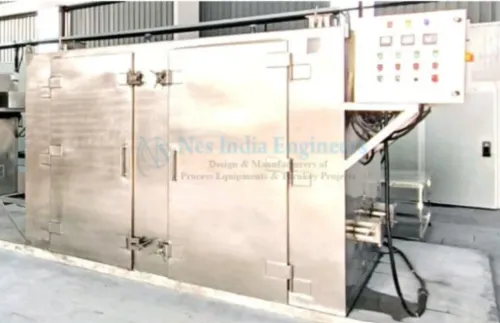

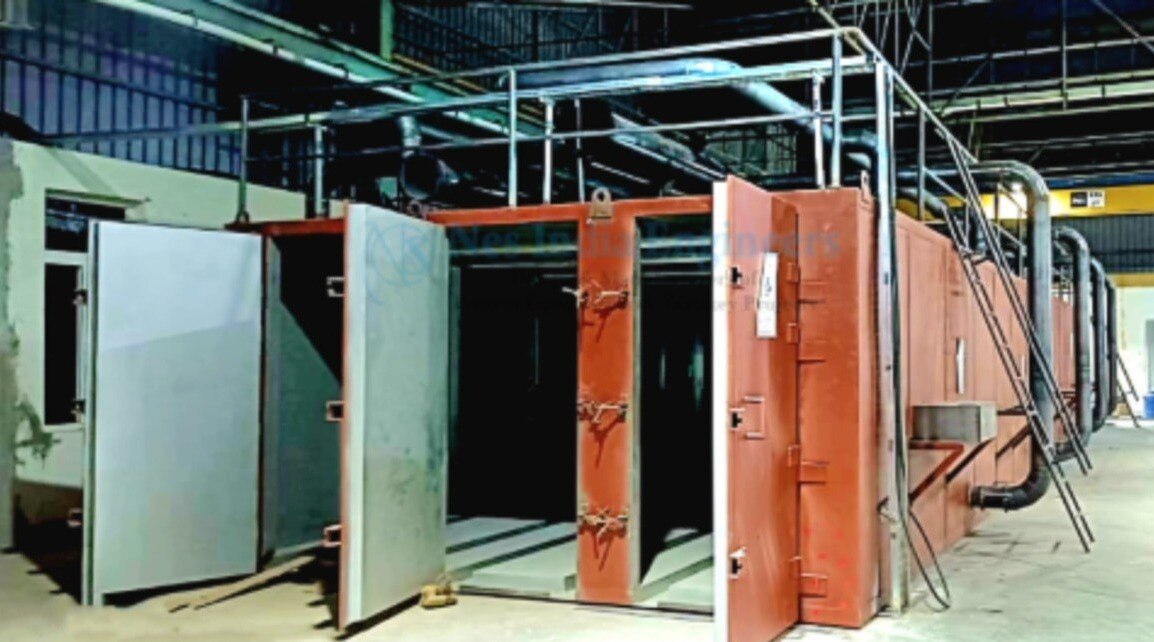
Wet pockets, crusted surfaces, sticking, discoloration and long batch cycles rarely point to heater capacity alone. You will be able to separate upstream dewatering faults from dryer design faults, specify the operating variables that matter, and build an acceptance test that proves uniform, safe mineral drying.
Key takeaways
- Check airflow, bed depth and loading before increasing heater capacity.
- Measure moisture at multiple tray positions to identify drying uniformity.
- Choose vacuum drying for heat-sensitive or oxygen-sensitive minerals.
- Demand endpoint tests, dust control and seasonal performance data before purchase.
Map the Symptom Before You Change the Dryer
Wet pockets, dry edges and tray-to-tray variation point first to airflow or loading, not automatically to inadequate heater capacity. These batch dryer problems become easier to isolate when you match each visible failure to a measurable process condition.
| Symptom | Most likely cause | What to check |
|---|---|---|
| Excess residual moisture | Feed moisture is too high, the bed is too deep, or air temperature and velocity are low | Measure moisture at the top, middle and bottom of the bed |
| Uneven drying | Air bypass, fan-discharge maldistribution, uneven spreading or edge effects | Map moisture at centre, corners, door side and each tray level |
| Surface crust | Rapid surface drying has trapped moisture below | Compare crust thickness with bed depth and inspect the falling-rate period |
| Dust carryover | Air velocity is excessive, the feed is friable, or capture is undersized | Check exhaust particulate, cyclone loading and filter blinding |
| Discoloration | Product temperature, oxidation or residence time is too high | Compare product temperature with the mineral’s phase or assay limit |
| Agglomeration | Wet material was overloaded or remained hot after drying | Inspect granule size before and after drying |
| Long batch time | Deep beds, poor circulation or a prolonged falling-rate period | Record heating, drying, cooling, unloading and cleaning times |
| Sticking | Wet cake, soluble salts or unsuitable tray surfaces | Check tray condition and scrape force during unloading |
For tray dryer mineral processing, test representative material before changing equipment. Record particle-size distribution, feed moisture, bulk density, mineralogy, tray loading depth, air temperature, velocity and recirculation. Sample multiple positions across multiple batches; an acceptable average can hide off-spec wet pockets.
Control the Variables That Determine Mineral Drying
Set up tray dryer mineral processing from a representative lot, not a generic brochure sample. Load the mineral cake or granules at the intended tray depth, spread them evenly, and match the planned tray spacing and air circulation. Record these variables before choosing temperature or cycle time:
- Feed definition: measure wet-basis moisture, particle-size distribution, bulk density, mineralogy, solvent content and thermal sensitivity.
- Moisture duty: calculate water evaporated as (feed mass × feed wet-basis moisture) − (product mass × product wet-basis moisture).
- Heat duty: size the heater for mineral, tray and air sensible heating, then add dryer heat losses.
- Scale-up: test the intended bed depth; a thicker layer can create a long falling-rate period as moisture travels through the dried outer layer.
- Acceptance data: record drying time, final-moisture distribution, dust loss, product phase and assay.
- Heating choice: use indirect heating when combustion products or entrained fines could contaminate the mineral; account for added heat-transfer resistance and fouling cleaning.
Run staged heat-up, drying and cooling rather than applying full heat immediately. Calculate output from the complete batch cycle: loading, heating, drying, cooling, unloading, cleaning, sampling and inspection. A capacity figure based only on residence time will overstate hourly production.
Capture exhaust according to particle size, temperature and moisture; use a cyclone as pre-separation, not as automatic proof that fine dust is controlled.
Choose Atmospheric or Vacuum Drying for the Material
Atmospheric tray drying is appropriate for mineral solids that tolerate heated air without oxidation, discoloration, decomposition or loss of a volatile component. It suits robust granules, sand-like concentrates and inorganic powders when the target moisture is moderate and air contact will not change the product.
Vacuum drying better protects a mineral product when heat or oxygen causes damage, or when residual solvent must be removed at a lower product temperature. Lower pressure reduces the boiling temperature, but it does not automatically solve poor heat transfer through a deep, compact cake.
| Option | What it means | When it applies |
|---|---|---|
| Atmospheric tray dryer | Heated air passes across loaded trays at near-ambient pressure | Robust minerals, free-flowing granules and products without oxidation or thermal-sensitivity concerns |
| Vacuum tray dryer | Reduced pressure removes moisture or solvent at a lower boiling temperature | Pigments, hydrated salts, precipitates and concentrates vulnerable to discoloration, oxidation or crystal change |
| Vacuum with inert gas | Reduced pressure drying with controlled nitrogen or another approved gas | Oxygen-sensitive products where air exposure could alter assay or colour |
Do not choose vacuum solely to shorten a long batch. Poor spreading, low exposed area and slow internal diffusion will preserve wet pockets while increasing pump load and cycle complexity.
Compare the complete batch cycle: loading, heating, drying, vacuum pull-down, cooling, unloading, cleaning and inspection. In tray dryer mineral processing, investigate batch dryer problems with the intended bed depth and representative feed before selecting the pressure system.
Prove the Endpoint, Capacity and Safety Before Purchase
A dryer is proven only when a representative mineral batch meets a measured moisture map, capacity target and safety limit—not when one average sample looks acceptable. Calculate water evaporated as feed mass × feed wet-basis moisture minus product mass × product wet-basis moisture; size heating for mineral, trays and air, plus heat losses.
Test at the intended bed depth, because a thicker layer can create a long falling-rate period.
- Issue several samples covering normal and worst-case particle-size distribution, feed moisture, bulk density and mineralogy. Record tray loading depth, air temperature and velocity, recirculation ratio, drying time, final moisture at centre and edges, dust loss, and product phase or assay.
- Run multiple batches, then map moisture at front, centre, rear, top and bottom trays. Reject a proposal if it meets the average but leaves wet pockets, dry edges, unacceptable assay change or excessive agglomeration.
- Calculate hourly output from the complete cycle: loading, heating, drying, cooling, unloading, cleaning and sampling. Do not accept a capacity based only on residence time.
- Put the guarantee on paper for design ambient temperature, relative humidity, exhaust humidity or dew point, and humid-season performance. Require temperature limits, guards, emergency stop, over-temperature cut-out, dust containment and solvent LEL controls where applicable.
A tray dryer manufacturer for mineral processing problems in Hyderabad should supply the test report, instrument calibration records and signed acceptance limits. Nes India Engineers becomes worth comparing when it can translate those limits into a documented pilot or factory acceptance test rather than offer heater power alone.
Related products
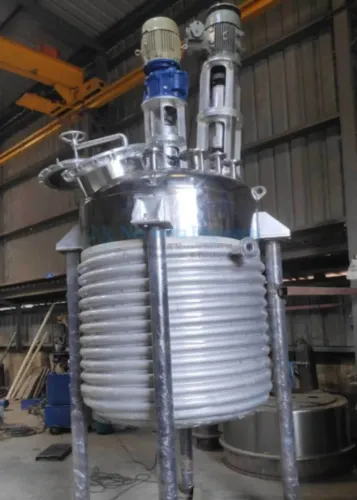
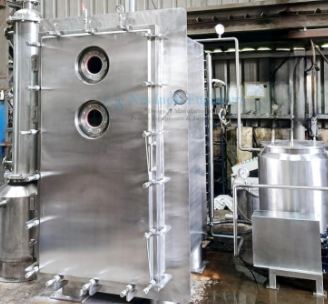 | Batch Dryers We Ness India Engineers from Pune, Maharshtra, India are a leading manufacturer, supplier and exporter of vacuum tray dryer in India. View product → |
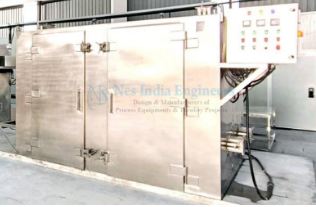 | Batch Dryers Nes India Engineers are the most leading Manufacturers, Suppliers, Exporters of Atmospheric Tray Dryers in India, Pune, Aurangabad, Goa, Chennai,... View product → |
Specify Dust Control and Seasonal Performance
Specify the guarantee at the worst seasonal condition, not at a comfortable laboratory ambient. For a tray dryer manufacturer in Hyderabad, state design inlet temperature and relative humidity, exhaust humidity or dew point, recirculation ratio, and required cycle performance during the humid season.
Hot, humid air carries less additional moisture than dry air at the same temperature, so an unchanged airflow setting can extend the batch.
Control dust at its source with enclosed charging and discharge, sealed tray access, suitable filtration, and a slight negative pressure inside the dryer. Excessive air velocity can strip fines from the bed, contaminate the exhaust, and reduce product yield. If the mineral dust is combustible, require an NFPA 652 dust-hazard analysis covering:
- Dryer chamber and recirculation duct
- Dust collector and filter arrangement
- Discharge equipment and downstream conveyors
- Isolation, venting and explosion-propagation protection
Do not treat an explosion vent on the dryer as a complete solution. An ignition in the collector can travel back through an unprotected duct.
Choose indirect heating when combustion products or entrained fines could damage purity or assay; specify the added heat-transfer surface and cleaning access. Direct heating requires defined exhaust composition and contamination limits.
Run acceptance tests with representative feed, recording particle-size distribution, moisture, bulk density, mineralogy, bed depth, air temperature and velocity, recirculation, cycle time, moisture mapping, dust loss and phase or assay. Test multiple batches. This exposes batch dryer problems such as wet pockets and tray-to-tray variation that one average result conceals.
Frequently asked questions
What causes wet pockets in a mineral tray dryer?
Check airflow distribution, bed depth, material loading and tray-to-tray positioning before changing heater capacity. Sample moisture from wet and dry zones to identify the controlling variable.
How do you improve tray dryer mineral processing uniformity?
Control the mass loaded per tray, spread thickness, tray spacing, airflow pattern and batch mixing practice. Compare moisture results from tray edges, centres, top layers and bottom layers.
When should you choose vacuum drying for minerals?
Choose vacuum drying when the material is heat-sensitive, oxidises in air or requires a lower evaporation temperature. Use atmospheric drying when the material tolerates air exposure and operating simplicity matters more.
What should you verify before buying a tray dryer for mineral processing?
Verify endpoint moisture, batch capacity, drying-cycle time, temperature uniformity, dust collection, containment, cleaning access and performance across seasonal ambient conditions.